One Pattern, Four Fabrics: Why Your Maxi Dress Buy Lives or Dies on the Fabric Spec Sheet
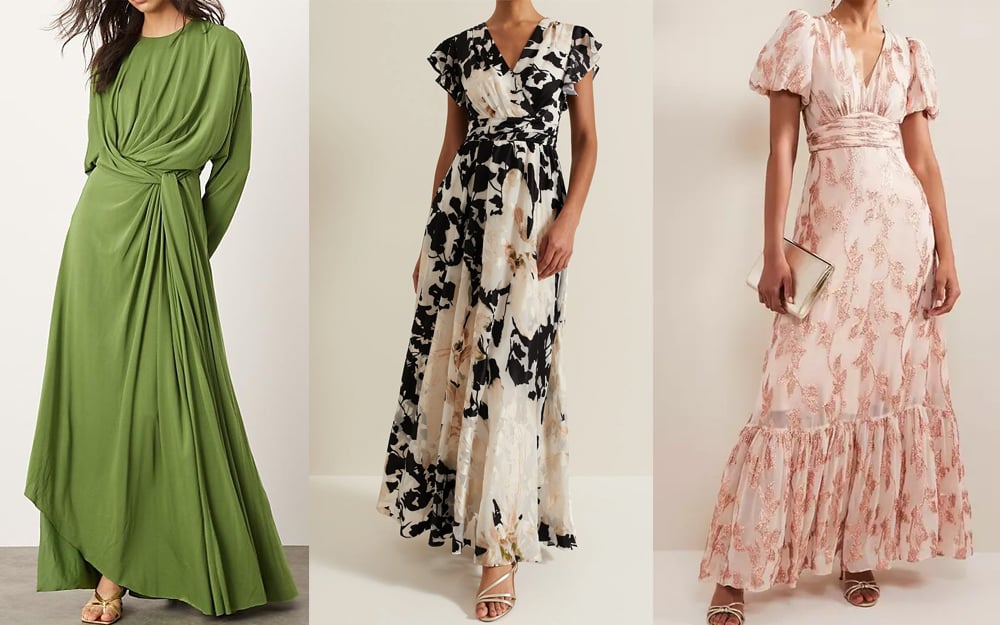
I still remember the call. A startup brand owner in Los Angeles approved a chiffon maxi dress sample in March 2024, loved the drape, loved the way it moved in the studio photos, and placed a 600-piece order. For her second drop, she reused the exact same tech pack but switched to cotton poplin to hit a lower price point. The result hung stiff as a board, photographed flat, and returned at twice the rate of the chiffon version. Same pattern. Same measurements. Completely different product.
That story is why I never let a buyer talk about pattern before we talk about fabric. In a maxi dress buy, the fabric spec sheet is not a cost line item you finalize at the end of a negotiation. It is the decision that determines what your customer sees on the rack, how the dress behaves after three washes, and whether your reorder is a repeat or a rescue mission. The same pattern sewn in different fabrics produces a completely different product, and nowhere is that more true than in a floor-length silhouette where every property of the cloth is amplified over two meters of vertical drop.
This guide walks through four fabric families the way a sourcing advisor actually would: chiffon, cotton poplin, jersey knit, and woven viscose. We will score each against the same five axes, tie every claim to a dated sourcing scenario and a price band, and finish with a decision matrix that maps fabric to customer segment. By the end, you should be able to hold a supplier quote next to your target customer and know, in under five minutes, whether the fabric spec matches the business you are trying to build.
Why the Fabric Spec Sheet Decides Your Sell-Through
Buyers often treat fabric as a cost line item. That framing is backwards. Fabric drives drape and weight, drape and weight drive silhouette, silhouette drives the customer’s perception of value, and perception drives sell-through and return rate. A fabric that saves $1.20 per unit in FOB cost can easily cost you three times that in returns, markdowns, and the customer reviews you cannot delete.
To compare fabrics fairly, I use five axes. Every fabric family in this article gets scored against all five, not just the ones it wins:
- Drape — how the fabric falls and moves. High drape reads fluid and feminine; low drape reads structured and architectural.
- Weight (GSM) — grams per square meter. This is the single best predictor of how a maxi dress will hang, photograph, and survive shipping.
- Opacity — how much light passes through. Low opacity forces a lining decision, which changes your true unit cost.
- Wrinkle behavior — how the fabric looks after a week in a poly bag and a cross-border shipment. This is where return rates are quietly decided.
- Care requirements — what the customer must do to keep the dress looking like the photo. Care requirements that mismatch the price tier are a compliance and satisfaction risk.
I deliberately cover four fabric families rather than two, because the middle ground is where most first- and second-order buyers actually land. Chiffon and cotton poplin are the extremes; jersey knit and woven viscose are where the compromises live.
The Four Fabric Families Under the Microscope
The table below reflects quotes I collected from three export factories in Guangzhou and one in Hangzhou during Q1 2024, for orders of 300–500 pieces per colorway. Treat these as indicative bands, not fixed prices, and always re-quote against your own pattern and trim.
| Fabric | Drape | Weight (GSM) | Opacity | Wrinkle Behavior | Care Requirements | Indicative FOB per Unit (300–500 pcs) |
|---|---|---|---|---|---|---|
| Chiffon | High | 60–80 | Low | Low wrinkle | Hand wash or delicate cycle | $4.80–$6.20 |
| Cotton poplin | Low | 110–130 | High | High wrinkle | Machine wash | $5.60–$7.40 |
| Jersey knit | Medium | 150–180 | Medium-high | Low wrinkle | Machine wash | $4.20–$5.80 |
| Woven viscose | High | 90–110 | Medium | Medium wrinkle | Hand wash or gentle cycle | $5.20–$6.90 |
Hold this sheet next to a supplier quote and you can immediately see where each fabric sits. Now let’s walk through what those numbers actually mean on a production floor.
Chiffon: The Photograph-Friendly Fabric With a Lining Bill
Chiffon’s low opacity is not a flaw; it is a specification that requires a decision. For a maxi dress, that decision is almost always a full or partial lining, and the lining is where the headline FOB number stops being the real number. In my Q1 2024 quotes, a 60–80 GSM chiffon maxi at $4.80–$6.20 FOB typically added $1.10–$1.60 per unit for a matching polyester lining, plus a hem finishing step that adds roughly $0.25–$0.40. That pushes the true unit cost to $6.15–$8.20 before you have printed a single hangtag.
The trade-off is worth it for resort wear and occasion buyers, who accept hand-wash care and pay for the way chiffon moves in photographs. Everyday casual buyers usually do not. If your customer is the latter, the lining bill is money you will not recover.
Cotton Poplin: Structure, Opacity, and the Wrinkle Tax
Cotton poplin at 110–130 GSM gives you shape. A poplin maxi holds a structured silhouette, which suits certain customer segments beautifully and actively works against others. It is fully opaque, machine washable, and reads as a value purchase to a customer who wants something substantial.
The wrinkle tax is the catch. After a week in a poly bag and a cross-border shipment, a poplin maxi dress arrives at the customer’s door looking like it slept in the box. Pressing and packaging add roughly $0.30–$0.50 per unit, and even then, the customer will wash it, hang it wrong, and blame the dress. My rule of thumb: poplin is a strong choice for everyday casual and plus-size assortments where structure is a selling point, and a poor choice for resort wear where the photo must look effortless.
Jersey Knit: Comfort That Hides and Reveals
Jersey knit is the fabric most likely to satisfy a maternity or plus-size customer. At 150–180 GSM, it stretches, forgives, and moves with the body, and it is machine washable and low-wrinkle. That combination is genuinely hard to beat for a comfort-first customer.
But the same qualities that make it forgiving can make it look unstructured in photographs, and at the lower end of the GSM range, transparency and hem growth become real risks. I have seen 150 GSM jersey maxis grow two centimeters at the hem after five washes. For retail-facing products, choose the upper end of the range, 170–180 GSM, and confirm shrinkage testing with your supplier before you commit.
Woven Viscose: The Middle Ground That Still Needs Care Labels
Woven viscose at 90–110 GSM sits between chiffon and poplin on most axes. It drapes well, so you get the fluid look without a full lining bill, and its medium opacity means a half-slip or a partial lining often suffices. That is why it is a popular choice for buyers who want resort-ready drape at an everyday-casual price.
The caveat is care. Viscose is a cellulosic fiber that behaves differently when wet, and if the care label says machine wash while the fabric shrinks or distorts, the customer will find out. Care label accuracy is a compliance consideration, not just a customer-service one. Write the care instruction into the purchase order and test a wash sample before production.
The Decision Matrix: Matching Fabric to Your Customer
Start from the customer, not the fabric. The matrix below maps each segment to a recommended fabric, the primary reason, and the main risk you must manage.
| Target Customer Segment | Recommended Fabric | Primary Reason | Main Risk to Manage |
|---|---|---|---|
| Resort wear | Woven viscose or chiffon | Drape and photograph quality | Lining cost and care requirements |
| Everyday casual | Cotton poplin or jersey knit | Durability and easy care | Wrinkles or visible body lines |
| Maternity | Jersey knit (170–180 GSM) | Stretch and forgiving fit | Hem growth and transparency at low GSM |
| Plus size | Woven viscose or jersey knit at higher GSM | Drape without cling | Opacity and structure |
For resort wear, the customer is buying a feeling, and drape is the product. Woven viscose gives you that feeling at a lower true cost than chiffon, provided you accept the care requirement. For everyday casual, the customer wants to wash the dress and wear it again, which points to poplin or jersey knit depending on whether she values structure or comfort. For maternity, jersey knit is the clear answer, but only at the upper end of the GSM range. For plus size, woven viscose offers drape without cling, while a higher-GSM jersey knit offers stretch without transparency.
This matrix is a starting point for a conversation with your supplier, not a substitute for sampling. A buyer serving two segments may need two fabric specs for the same pattern, and that is a perfectly rational outcome.
Sampling, MOQ, and the Cost of Getting It Wrong
Sampling the same pattern in two fabrics is almost always cheaper than a failed first production run. In my Q1 2024 experience, a single sample in chiffon or poplin ran $35–$55 per piece including shipping, so two samples cost $70–$110. A failed 300-piece run at an average FOB of $5.80 is $1,740 in product you cannot sell at full price, before you count the air freight and the markdown.
Low-MOQ suppliers make two-fabric sampling feasible for a first or second order. Platforms like FashionTIY, which has operated since 2015 as a self-operated wholesale platform with factory-direct pricing and one-piece minimums, are built for exactly this stage of a buyer’s business. The point is not to skip sampling; it is to make sampling affordable enough that you actually do it.
Private label buyers have one additional discipline: write the fabric spec into the purchase order, not just the email thread. Verbal fabric agreements are the most common source of disputes I see, and a PO that specifies GSM, composition, and care instructions protects both sides.
Conclusion: Spec the Fabric Before You Spec the Print
Fabric is a product decision, not a cost line. The same pattern in chiffon, cotton poplin, jersey knit, and woven viscose produces four different products with four different customers, four different return profiles, and four different price ceilings. The five axes — drape, weight, opacity, wrinkle behavior, and care requirements — give you a repeatable way to compare them, and the decision matrix gives you a way to start from the customer rather than the quote.
Here is the action list I give every first- and second-order buyer:
- Pick your customer segment first: resort wear, everyday casual, maternity, or plus size.
- Choose the fabric from the decision matrix, then check it against the five axes.
- Sample two specs of the same pattern before you commit to a production run.
- Write the fabric spec — GSM, composition, care instructions — into the purchase order.
If you are planning your first or second maxi dress buy, the next step is simple: request fabric samples and a quote against a specific pattern and target price point. Browse wholesale maxi dresses to see how each fabric family reads on model, then ask FashionTIY’s sourcing advisors for factory-direct options across all four fabric families, with low minimums and private label support, so you can test the spec before you bet the season on it.